RehearseAI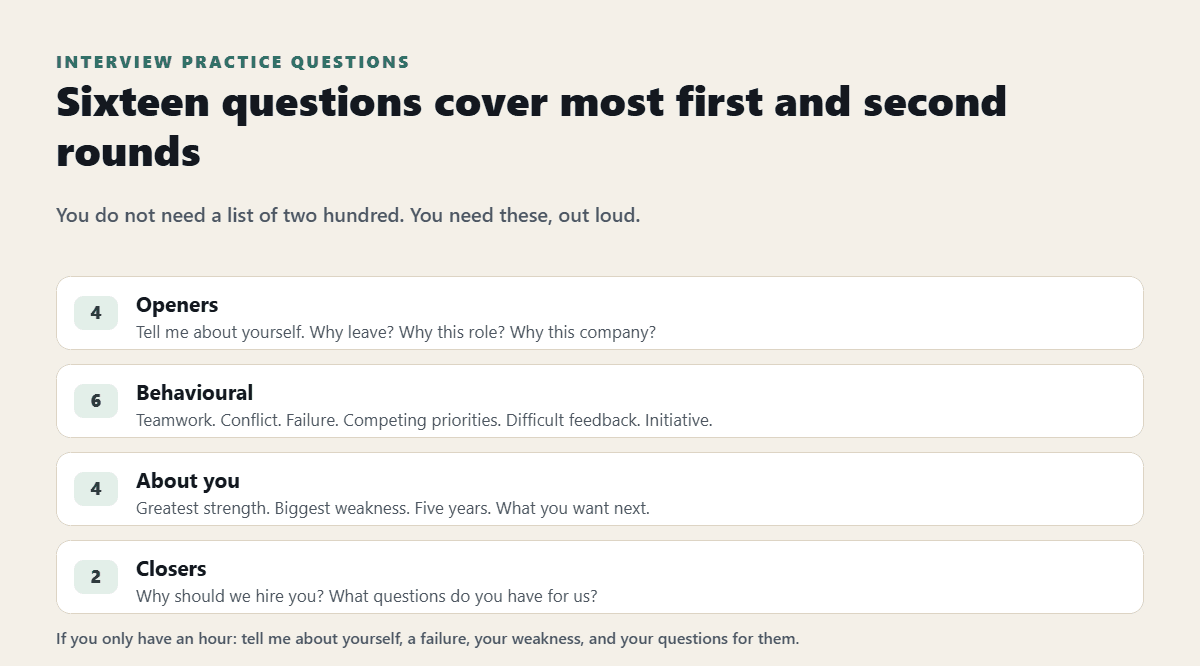
Most interview preparation is reading. You find a list of interview practice questions, read down it, think "yes, I could answer that", and close the tab feeling ready.
Then the interview starts, and the answer you were sure of comes out in a different order, twice as long, and with a middle section you did not plan.
That gap — between knowing an answer and being able to say it — is the entire problem. Practice questions only help if you use them out loud.
Here is a list worth practicing, and, more usefully, how to practice it.
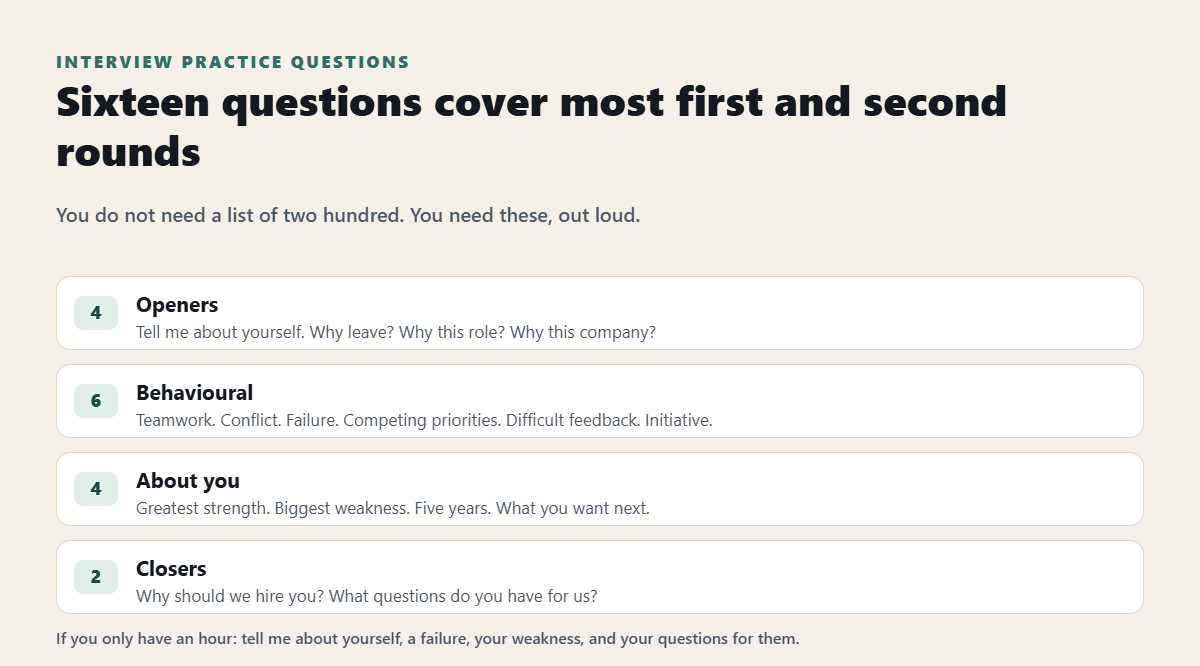
The questions almost every interview includes
Openers
- Tell me about yourself.
- Why are you looking to leave your current role?
- Why this role?
- Why this company?
Behavioral 5. Tell me about a time you worked in a team. 6. Tell me about a conflict with a colleague. 7. Tell me about a time you failed. 8. Tell me about a time you handled competing priorities. 9. Tell me about difficult feedback you received. 10. Tell me about a time you took initiative.
About you 11. What is your greatest strength? 12. What is your biggest weakness? 13. Where do you see yourself in five years? 14. What are you looking for in your next role?
Closers 15. Why should we hire you? 16. What questions do you have for us?
Sixteen questions covers the overwhelming majority of first and second rounds. You do not need a list of two hundred.
The four that decide most interviews
Not all sixteen carry equal weight. If you only have an hour, spend it on these:
"Tell me about yourself." First, sets the tone, and the one people most often deliver as a spoken CV. Ninety seconds: where you are now, what you have done that matters here, why this role next.
"Tell me about a time you failed." The honesty test. A disguised strength loses it. A real failure with a real correction wins it.
"What is your biggest weakness?" Same test in different clothes. Name something genuine and say what you are doing about it.
"What questions do you have for us?" Having none reads as indifference. Two real questions about the work is enough.
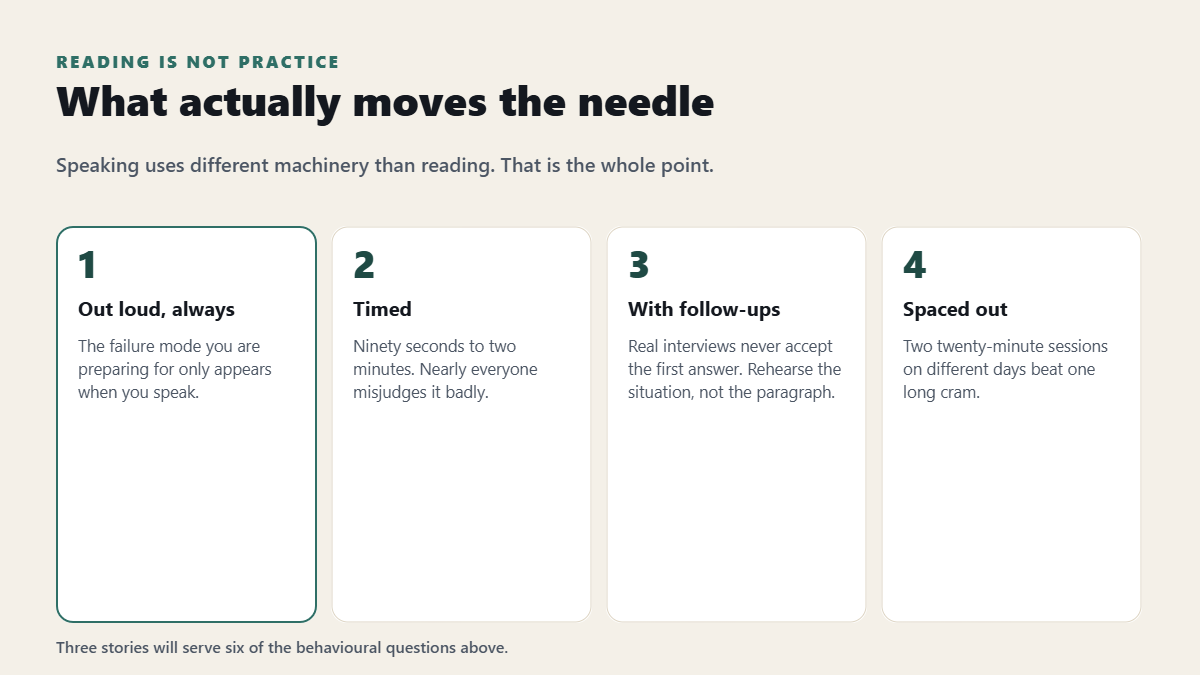
How to actually practice them
Say them out loud. This is not a stylistic preference. Speaking uses different machinery than reading, and the failure mode you are preparing for — losing the thread, running long, filling silence — only appears when you speak.
Time yourself. Ninety seconds to two minutes for most answers. Nearly everyone misjudges their own length by a wide margin in one direction or the other.
Practice the follow-up. Real interviews do not accept the first answer. "What would you do differently?" "What was your part specifically?" Rehearsing the paragraph does not prepare you for those; rehearsing the situation does.
Build three stories, not sixteen answers. Questions 5 through 10 can nearly all be served by three real situations. A story bank survives unexpected wording. A set of memorized answers does not.
Space it out. Two twenty-minute sessions on different days beat one long cram, and the last one should not be the night before.
The problem with practicing alone
You already know how this goes. The mirror does not ask follow-ups. A recording cannot push back. And asking a friend to grill you for twenty minutes on a Tuesday evening is a real favor, so most people quietly skip it and go back to reading lists.
That is the gap RehearseAI exists to close: the questions above, asked out loud for the role you are actually applying for, with follow-ups when you dodge and honest feedback afterwards on pace, filler words and whether the answer landed. It is available at eleven at night and it never gets bored of your third attempt.
Every account gets one free 5-minute interview a month, no credit card required. One session with these questions will tell you more about where you stand than another hour of reading.
Quick answers
How many interview questions should I prepare? Sixteen or so, built on three or four stories. Depth beats breadth.
How long should I practice for? Two or three twenty-minute sessions across a week. Longer sessions produce diminishing returns.
Should I write my answers out first? Write four lines per story, not full answers. Full scripts come out sounding like scripts.
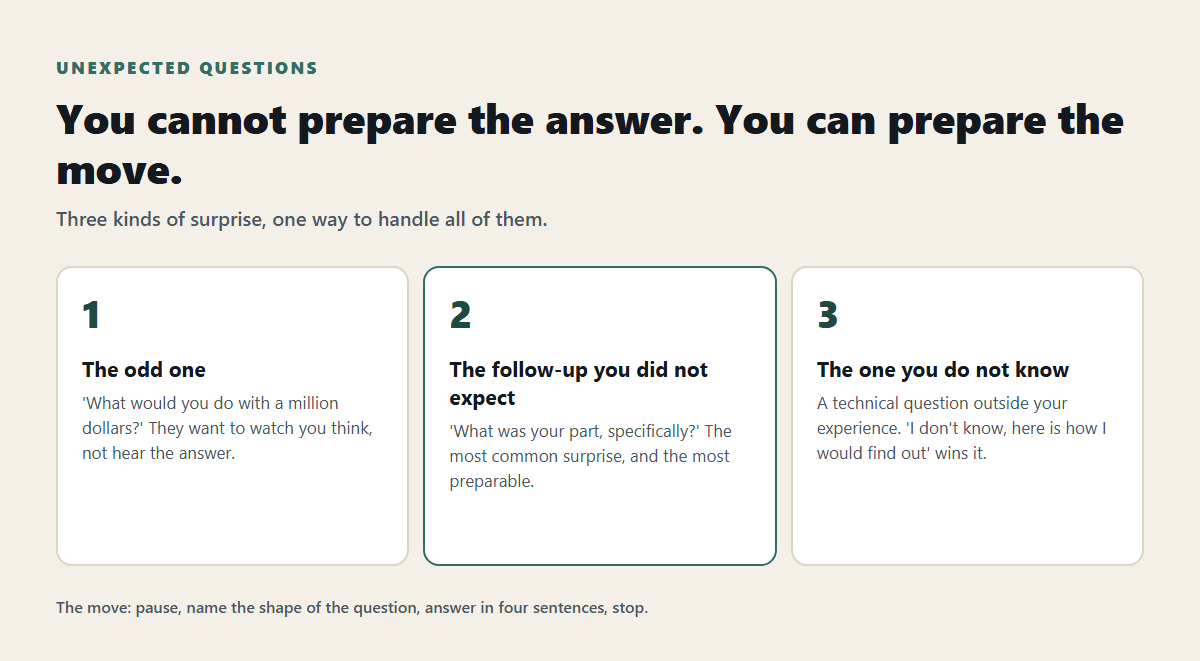
What if my mind goes blank in the room? Say "let me think about that for a second" and take it. A short pause reads as considered; guessing does not.
Behavioral questions here follow the STAR method. More on why I built this.
Want this list for the specific job you are applying to? The free question generator writes them from the posting — no account needed.