RehearseAI
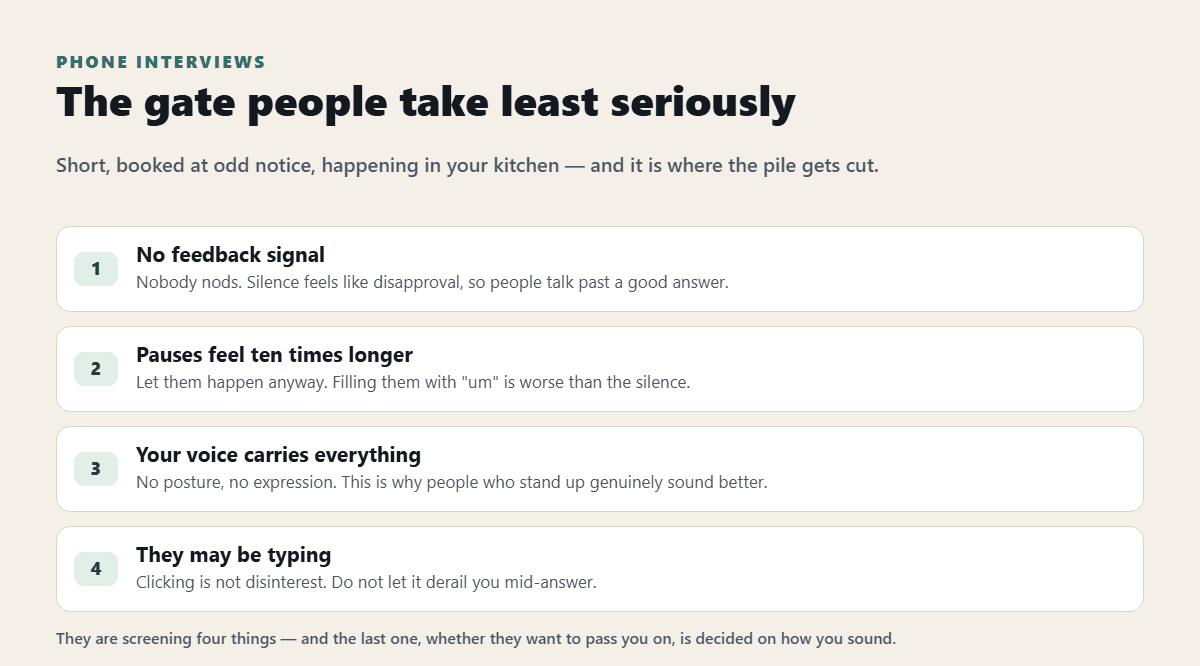
A phone interview is usually the first real gate, and it is the one people take least seriously. It is short, it is often booked at odd notice, and it happens in your kitchen — so it does not feel like a proper interview.
It is a proper interview. Its whole purpose is to reduce a pile of applicants to a shortlist, and most of the reduction happens here.
The good news is that the medium creates specific, fixable problems, and almost nobody prepares for them.
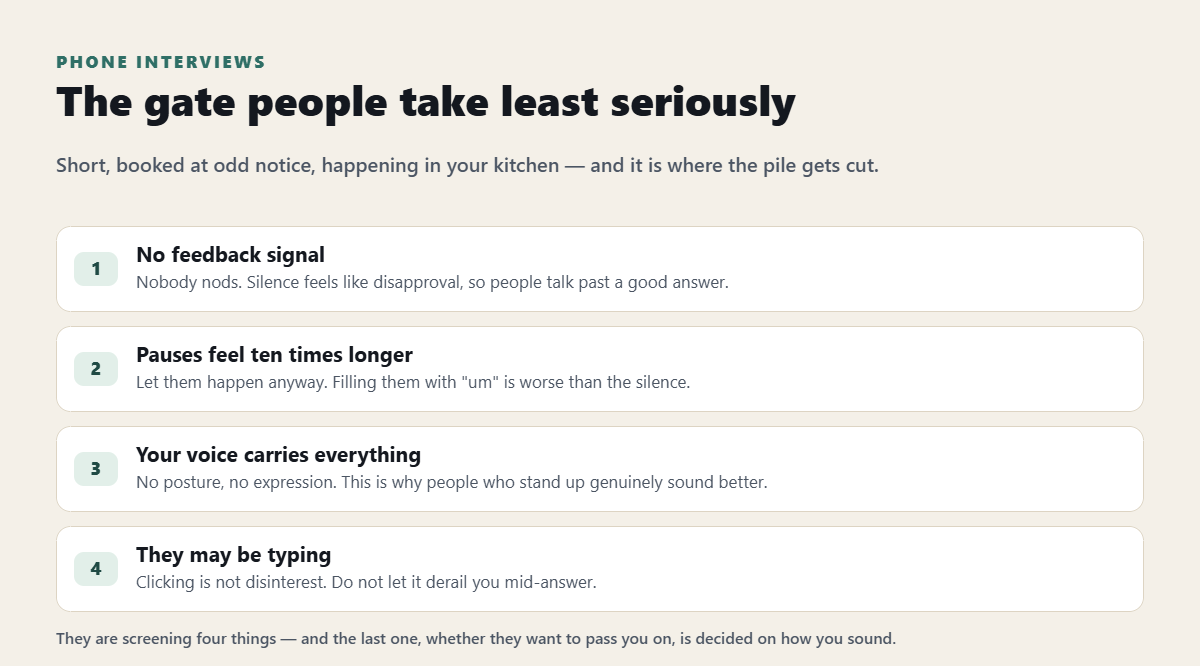
What is different when there is no face
You get no feedback signal. Nobody nods. Silence feels like disapproval, so people keep talking and overrun a perfectly good answer. Knowing this in advance is most of the cure.
Pauses feel much longer. A two-second pause on the phone feels like ten. Let them happen anyway — filling them with "um" is worse.
Your voice carries everything. No posture, no expression, no eye contact. Energy has to come through sound alone, which is why people who stand up genuinely do sound better.
They are often multitasking. A recruiter may be typing throughout. Clicking is not disinterest, so do not let it derail you.
What they are actually screening for
Phone screens are short because they are checking a small number of things:
- Can you explain what you do clearly and briefly?
- Does your experience match what the job needs?
- Are your salary expectations and availability workable?
- Are you a person they want to put in front of the hiring manager?
That last one is decided almost entirely on how you sound.
The questions
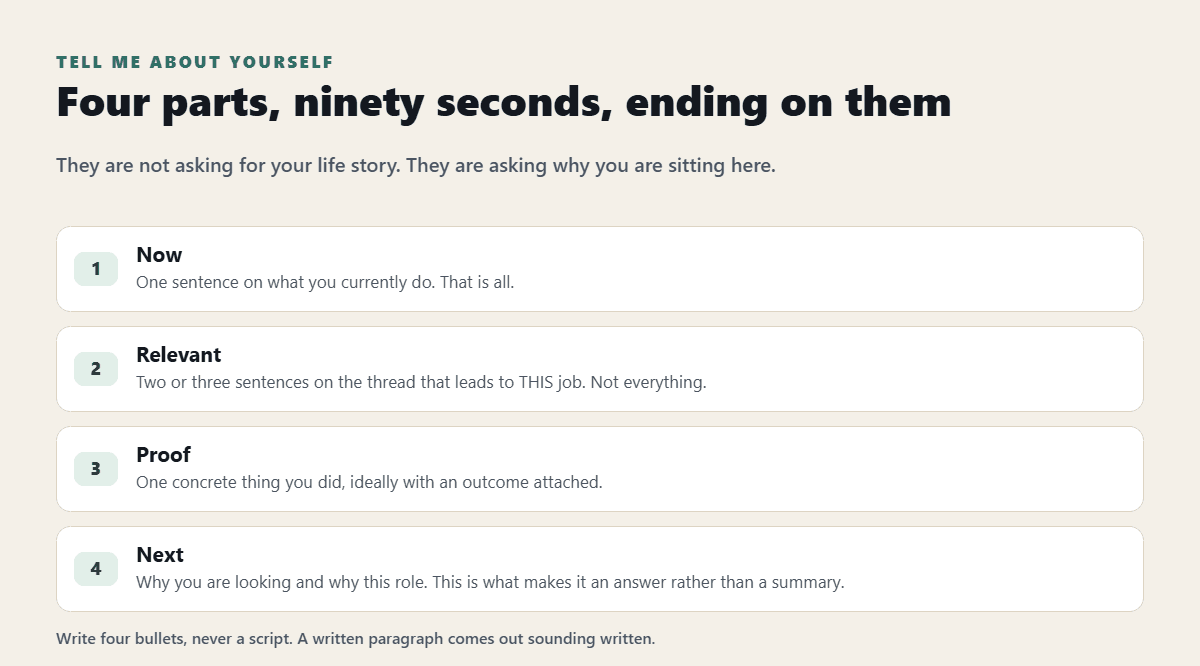
"Walk me through your background." Ninety seconds. Not your whole resume in order — where you are now, the parts that matter for this role, and why you are looking.
"Why are you interested in this role?" Something specific about the job or the company. It is a screen; a vague answer here is easy to filter out.
"What are you looking for in terms of salary?" Have a number or a range ready before the call. Being caught unprepared costs you more than the number itself will. It is also fine to ask what range the role is budgeted at.
"When would you be available to start?" Know exactly how much notice you need to give.
"Do you have any questions?" Have two. Even on a fifteen-minute screen.
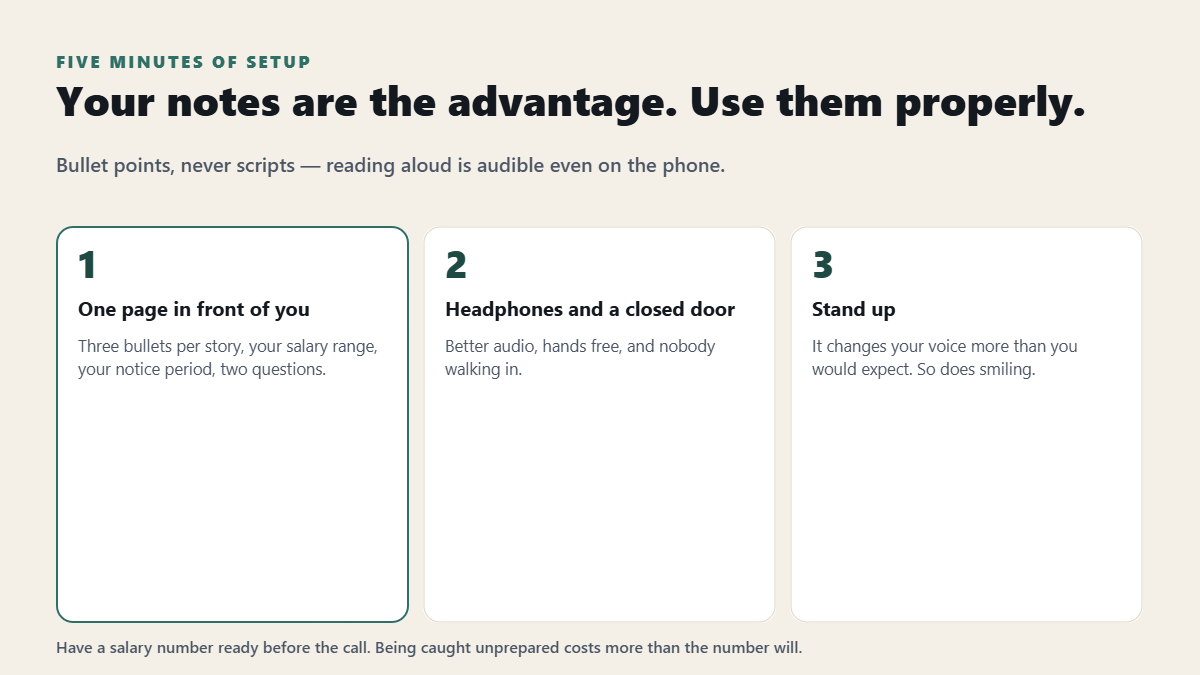
The setup, which takes five minutes
- Landline or good signal. A dropped call in the first minute is a bad start. If your cell signal is unreliable at home, say so and offer an alternative.
- Headphones with a mic. Better audio and your hands are free.
- Somewhere quiet, door closed. Warn anyone else in the house.
- Stand up, or sit upright. It changes your voice more than you would expect.
- Resume, job description and your notes in front of you. The single biggest advantage of a phone interview — use it.
- Water within reach.
- Smile occasionally. It genuinely comes through, and it feels ridiculous, and it works.
Notes are your advantage — use them properly
Bullet points, not scripts. Reading aloud is audible even on the phone: the rhythm flattens and the sentences get too neat.
Have on one page: three bullets per story, your salary range, your start date, and your two questions. That is all you need.
Practice on the phone, not in your head
This is the specific thing that helps. Have someone call you and ask three questions, or record a voice memo answering them. Listen back once.
You will hear something you cannot detect while speaking — usually that you are quieter and flatter than you think, or that you trailed off at the end of the answer instead of landing it.
If nobody is available, RehearseAI runs the questions out loud for the role and tells you afterward about pace, filler words and whether the answer landed. Every account gets 10 free practice minutes a month — one 10-minute interview, or shorter sits whenever you like, no credit card required, and one run is enough to fix the trailing-off habit.
Quick answers
How long is a phone interview? Usually fifteen to thirty minutes. Treat a fifteen-minute slot as exactly that and keep answers tight.
Is it OK to take notes during the call? Yes, and it is a good idea. Nobody can hear you writing if you are on headphones.
What if the line drops? Call right back, apologize once briefly, and carry on. It happens and nobody holds it against you.
Should I dress up for a phone interview? Not necessary, though some people find it helps them focus. Standing up matters more.
<!-- related-guides -->Related guides
If this was useful, these are the next ones to read:
- Mock Interview Practice: How to Improve Your Answers and Timing: Most interviews are lost on pacing, not knowledge. How to get your answers into the sixty to ninety second window, and handle the follow-up without unraveling.
- What Is a Mock Interview? Meaning and What to Expect: What a mock interview is, in plain words: who runs one, what happens in the room, how long it takes, and how to prepare so the practice is worth your time.
- Mock Interview Questions to Ask, Round by Round: Mock interview questions for whoever is playing the interviewer: a ready list by round, a set for high school students, the follow-ups that make it real, and what to listen for.
- Mock Interview Coaching: Is It Worth Paying For?: Mock interview coaching compared with a friend, a career center and AI practice: what a coach actually adds, when it is worth the money, and what to ask before you book.
Sources
The advice above lines up with what university career centers and professional bodies publish; these are the pages I checked it against:
- Phone Interviews — Clemson University Center for Career and Professional Development
- Phone Interview Tips — University of Colorado Boulder Human Resources (PDF)
- Phone Interview Tips — Ohio Northern University (PDF)
- Top 10 Phone Interview Tips — UT Permian Basin Career Services
Related: interview practice questions worth rehearsing and questions to ask in an interview. More on why I built this.
Have the likely questions in front of you on the call — the free question generator builds the list from the job posting.
<!-- quickwins-2026-10-27 -->Phone screens for front-desk and support roles often use customer service interview questions.