RehearseAI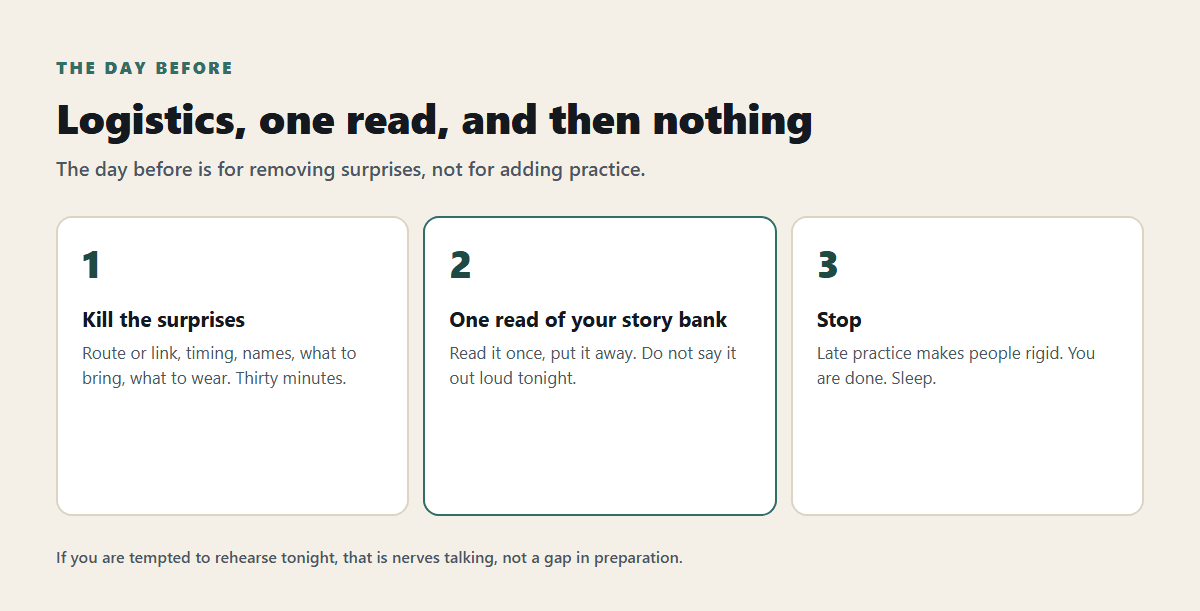
The day before an important interview has a particular texture. You have done the preparation, or most of it, and the nerves have arrived, and the nerves say the answer is more preparation. One more run through the answers. One more list of questions. One more hour on the company website.
The nerves are wrong. The day before is for removing surprises, not for adding practice, and the candidates who arrive best are usually the ones who did the least the night before. Here is what to do, what to stop doing, and the extra checks if the interview is on video.
Kill every surprise you can
Thirty minutes, all logistics.
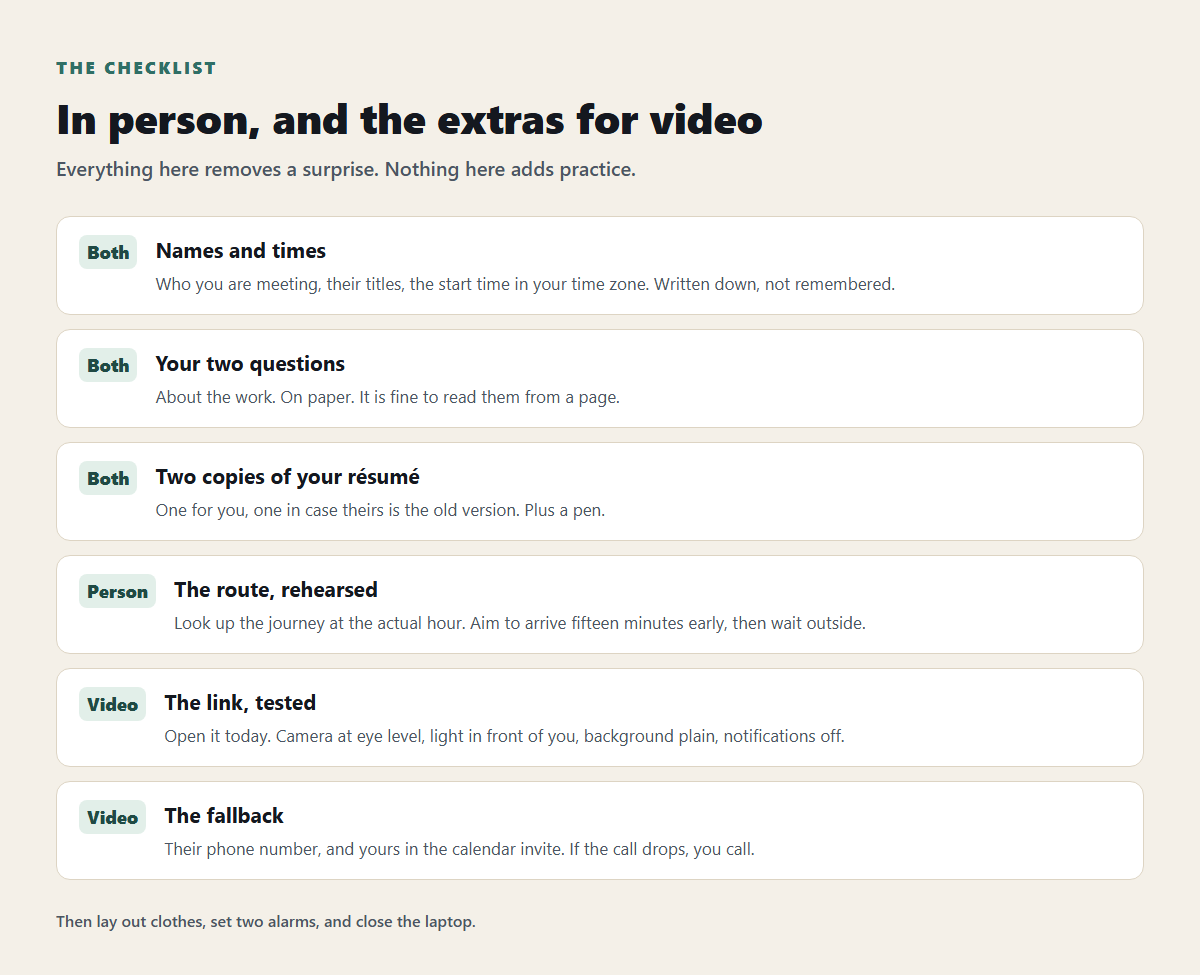
Names and times. Who you are meeting, their titles, the start time in your time zone, written down. Interviewers notice when you use their name, and they notice more when you do not know it.
The route, at the real hour. If it is in person, look up the journey at the time you will actually make it, not at eleven at night. Aim to arrive fifteen minutes early and wait somewhere outside; walking into reception twenty-five minutes early makes everyone uncomfortable.
What to bring. Two copies of your résumé (one for you, one in case theirs is the version you sent six months ago), a pen, your two questions on a page, and anything they asked for. Put it in the bag tonight.
What to wear. Decided and laid out. One notch above what the team wears day to day is the safe answer; if you do not know, the posting or the company's photos usually tell you.
The extras for a video interview
Video interviews add exactly one kind of surprise: technical. Remove it today, not tomorrow morning.
Open the link. Today. Some platforms want an install or a browser permission, and discovering that at 8:58 is the worst way to start.
Set the frame. Camera at eye level (a stack of books works), a light in front of you rather than a window behind you, and a background that is plain or tidy. Look at the camera when you speak, not at your own face.
Silence everything. Notifications off on the laptop and the phone. Tell the people you live with the time.
Have the fallback. Their phone number, and yours in the calendar invite. If the call drops, you call them; it turns a disaster into a thirty-second pause.
There is a fuller guide to recorded, one-way formats in HireVue practice; the checks above are for a live call with a person.
Read your story bank once, then put it away
One read of your four-line stories, silently, then close the notebook. The purpose is to reload them into your head, not to polish them.
Do not say the answers out loud tonight, and do not run a full mock interview. Late rehearsal tends to make people rigid rather than ready: you arrive tomorrow trying to reproduce last night's version instead of having a conversation, and the first unexpected follow-up knocks it over. If your preparation was any good, it is already in you. There is a whole post on how to tell whether you are ready; if you passed three of the four tests, you are done.
If you did not prepare at all and the interview is tomorrow, the exception applies: one hour on the story bank, then four answers out loud, twice, then stop. Even that beats a night of reading.
Then stop
Eat something normal. Set two alarms. Go to bed at the usual time, not early, because lying awake early is worse than sleeping late. If the nerves are loud, they are weather, not a verdict; breathe out slowly, longer than you breathe in, and let tomorrow be tomorrow. There is more on the nerves themselves in interview anxiety, and what actually helps.
And if you are the kind of person who cannot stop, use the free interview quiz: two minutes, ten questions, no speaking required. It scratches the itch without the stiffness. The spoken practice, if you want it, belongs to two or three days ago; RehearseAI runs it out loud for the role, and every account gets one free 5-minute interview a month, no credit card required. Tonight, though, you are done.
Quick answers
Should I practice my answers the night before? No. One silent read of your story bank, then close it. Practice belongs two or three days out.
What should I bring to an in-person interview? Two copies of your résumé, a pen, your two questions on paper, and anything they asked for. Pack it tonight.
What do I need to check before a video interview? The link opens, the camera is at eye level, the light is in front of you, notifications are off, and you have their phone number as a fallback.
How early should I arrive? Fifteen minutes early to the building, five minutes early to reception. Wait outside for the difference.
Sources
The checklist above lines up with what university career centers publish on interview preparation; these are the ones I checked it against:
- Interview Preparation Guide — UConn Center for Career Readiness
- Preparing for Interviews — Tufts University Career Center
- Interview Prep — Florida State University Career Center
The day before is day 7 of the seven-day schedule inside the interview preparation plan. More on why I built this.
Cannot stop? The free interview quiz takes two minutes — no account needed.