RehearseAI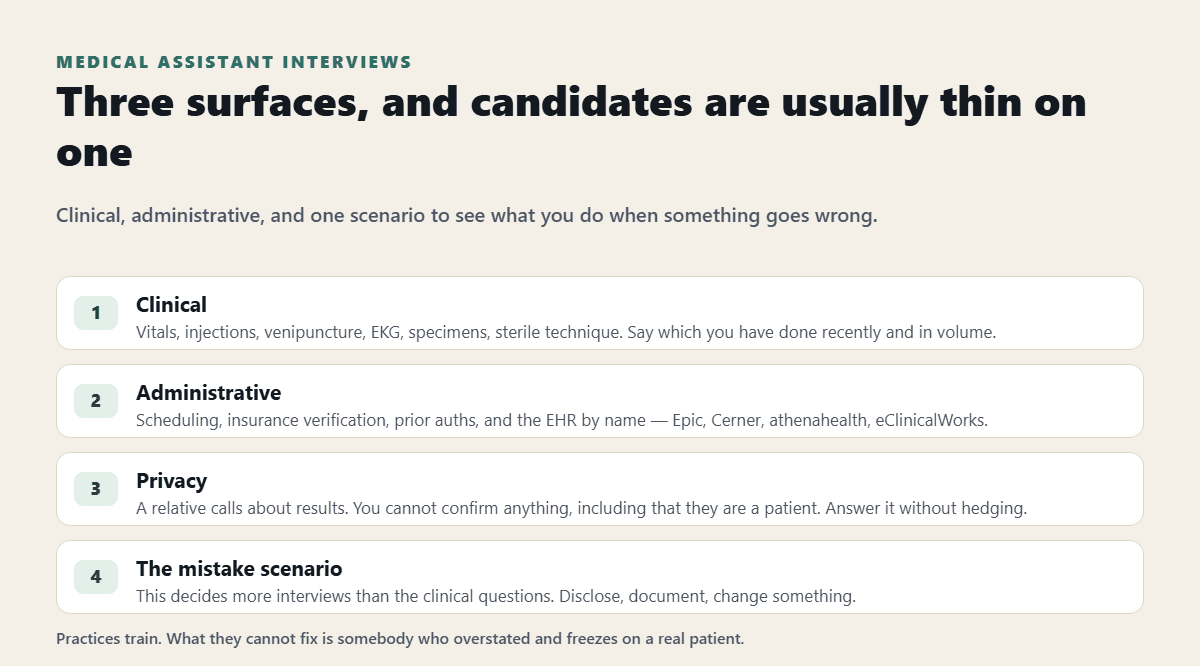
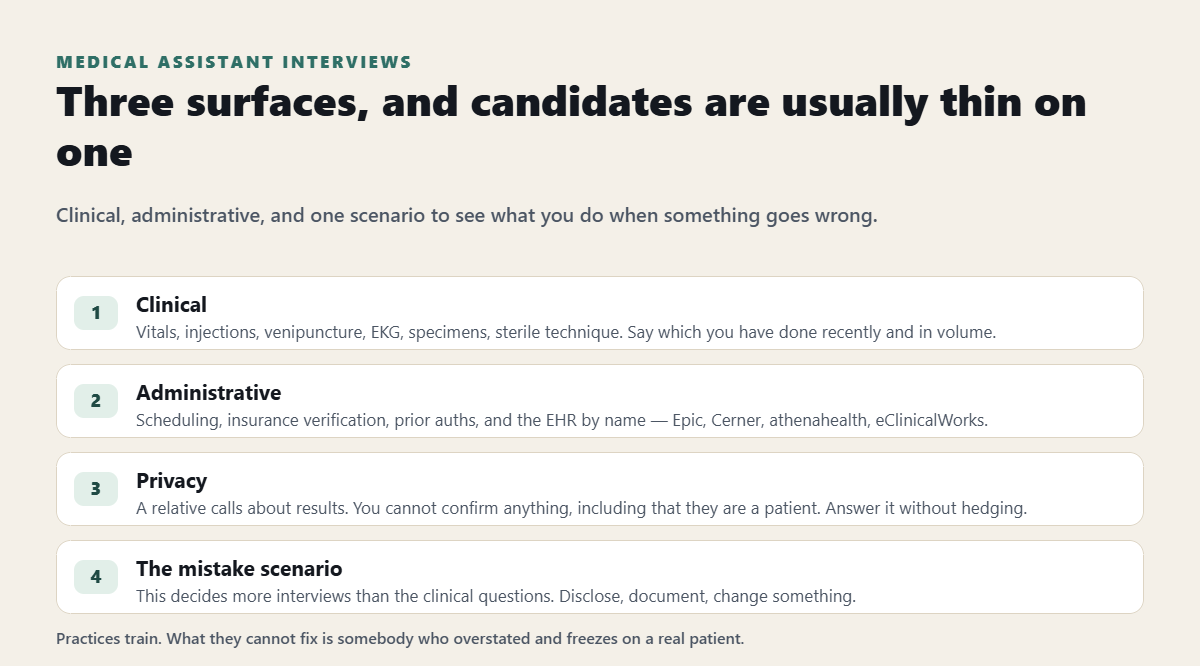
Medical assistant interviews cover an unusually wide surface, because the job does. In one shift you might room patients, take vitals, draw blood, handle prior authorisations, calm someone who is frightened, and answer a phone call from a person who should probably be in an emergency room.
The interview reflects that spread. Expect clinical questions, administrative questions, and at least one scenario designed to see how you behave when something goes wrong.
The clinical questions
"What clinical skills are you comfortable with?"
List them precisely, and mark the boundaries honestly. Vitals, injections, venipuncture, EKG, specimen handling, assisting with procedures, sterile technique. Then say which ones you have done recently and in volume, versus which you learned in training but have not practiced much.
Practices train. What they cannot fix is somebody who overstated and then freezes on a real patient.
"How would you take a patient history?"
They want to hear that you are systematic and that you know your limits: gather chief complaint, current medications, allergies, relevant history — and record what the patient said rather than your interpretation of it. Do not diagnose. Flag anything concerning to the provider immediately.
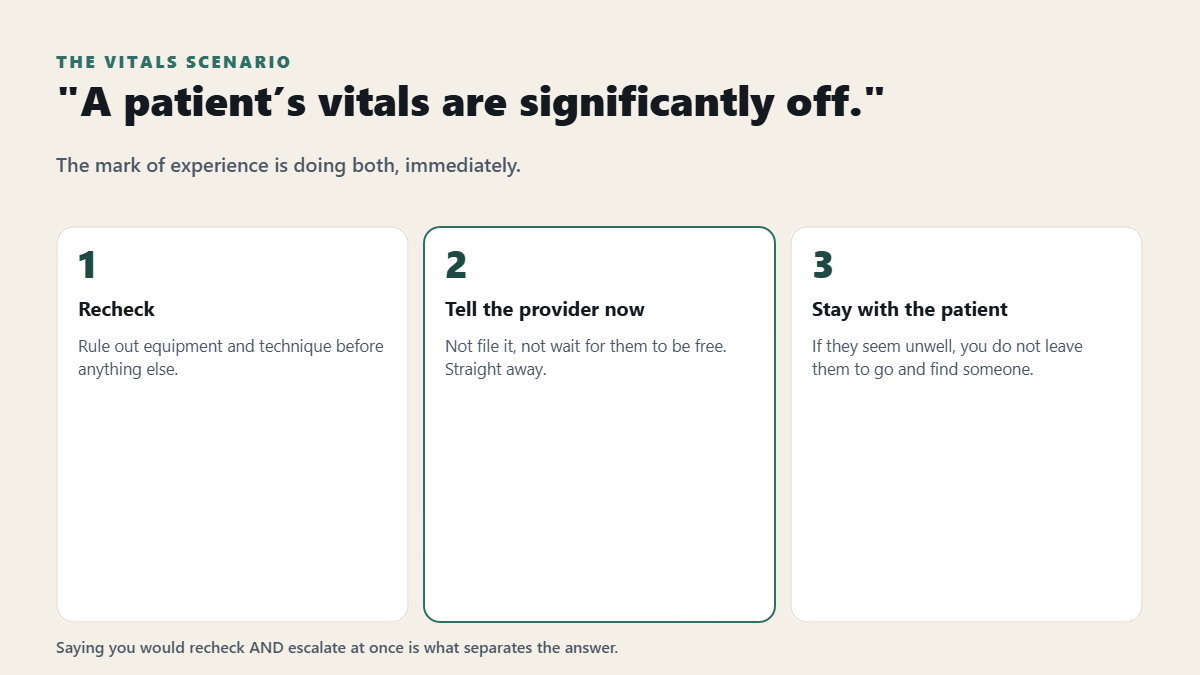
"A patient's vitals are significantly off. What do you do?"
The answer is not to wait. Repeat the measurement to rule out equipment or technique, tell the provider straight away rather than filing it, and stay with the patient if they seem unwell. Saying you would recheck and escalate at once is the mark of experience.
The administrative questions
Half the job, and often where candidates are thin.
Be ready on scheduling, insurance verification, prior authorisations, the EHR systems you have used, and how you handle a full schedule with a walk-in. Naming the specific EHR you have worked in — Epic, Cerner, athenahealth, eClinicalWorks — is worth more than a general claim to be a fast learner.
The one about privacy
"A patient's relative calls asking about their results."
There is a right answer and it is short. You cannot confirm anything, including whether the person is a patient, without authorisation on file. You explain politely, you check the record for a release, and you take a message for the provider.
Panels are checking that you will not be talked out of this by someone who sounds upset or important. Answer it plainly and without hedging.
The scenario they are really watching
"You realize you gave a patient the wrong paperwork — or made an error — and nobody else has noticed."
This question decides more interviews than the clinical ones.
Say what happened, say you would report it immediately to the provider or your supervisor, say you would document it through the incident process, and say what you would change so it does not recur. Do not soften it. A practice needs to know you disclose rather than hope.
What to ask them
- How many providers would I be supporting?
- What does a typical patient volume look like in a day?
- Who trains new assistants, and for how long?
- Which EHR do you use?
Patient volume per day is the question that tells you what the job actually feels like.
Practice the three that matter
Not all of the above needs rehearsal. Three do:
- Your clinical skills list, with the honest boundaries.
- The privacy call from a relative.
- The mistake you would have to disclose.
Say each one out loud in ninety seconds. Those three carry most of the weight, and all three are answers people get wrong by hedging rather than by not knowing.
If you want the follow-up questions too, RehearseAI runs the interview out loud for the role and gives you honest feedback on how it sounded. Every account gets one free 5-minute interview a month, no credit card required.
Quick answers
Do I need certification to interview? Requirements vary by state and employer. Bring whatever certification you hold, and be clear about what is in progress.
Will there be a skills test? Some practices ask you to demonstrate vitals or a draw. Ask when they invite you.
What should I wear? Scrubs are widely accepted; smart plain clothing is a safe alternative. Clinical tidiness matters either way.
What if I have administrative experience but little clinical? Say so and be specific about which half you are strong in. Many practices need the administrative side badly and will train the rest.
If they open with "tell me about a time…", use the STAR method. More on why I built this.