RehearseAI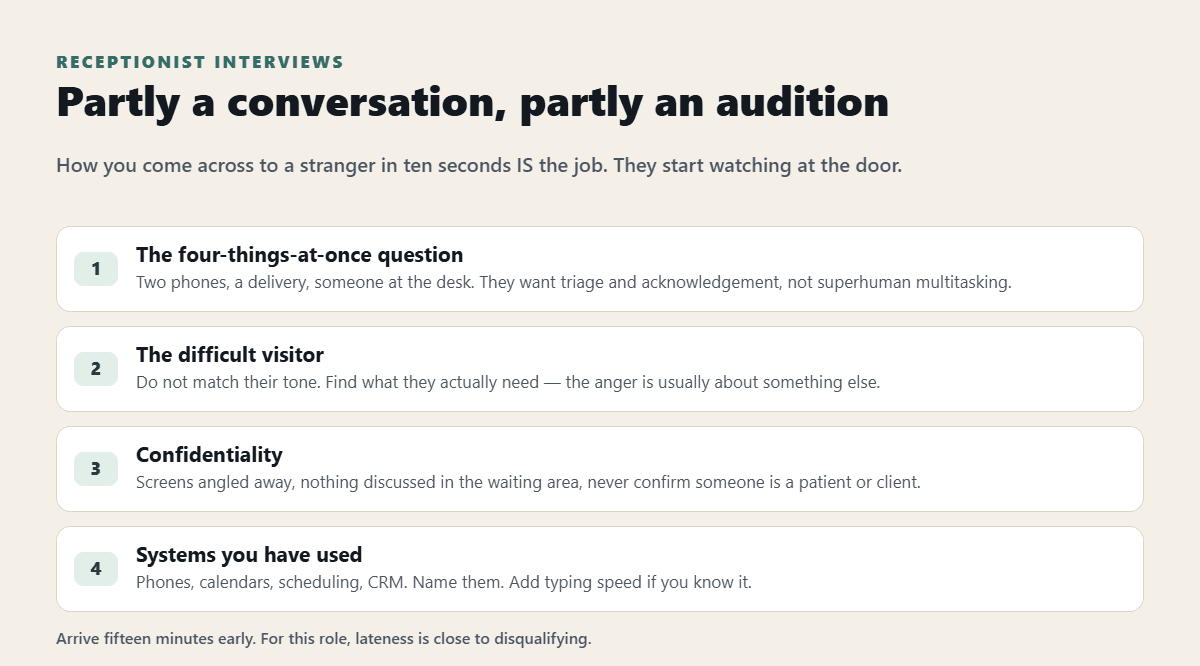
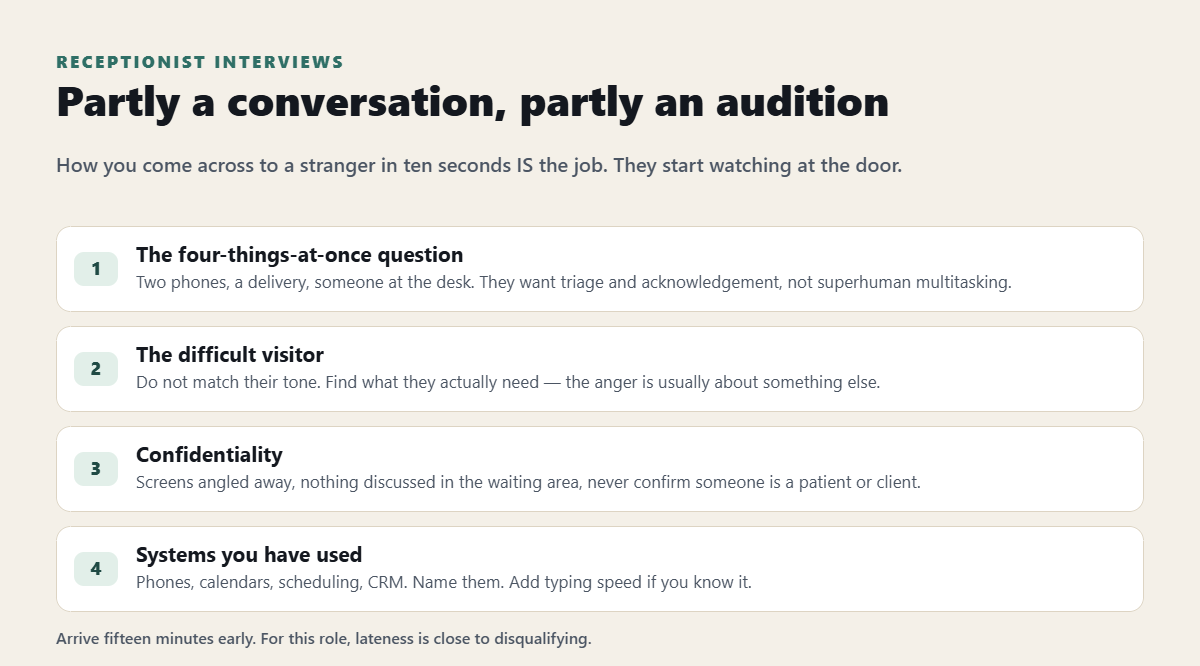
A receptionist interview is partly a conversation and partly an audition. From the moment you walk in, the person hiring you is watching something specific: how you come across to a stranger in the first ten seconds. That is the job.
So the questions matter, but so does everything around them — how you greet whoever meets you, whether you are flustered, how you handle being kept waiting.
Here is what gets asked, and what sits underneath it.
"Why do you want to be a receptionist?"
Avoid answers that make it sound like a placeholder while you look for something better. Even if that is partly true.
What works is naming what the job actually involves and saying you are suited to it: being the first point of contact, keeping several things moving at once, being the person who knows where everything is. If the setting matters to you — a clinic, a law firm, a school — say why.
"Two phones are ringing, a delivery needs signing, and someone is at the desk. Go."
The signature question of the category, and the one they most want to hear a real answer to.
They are not looking for superhuman multitasking. They are looking for triage and acknowledgment:
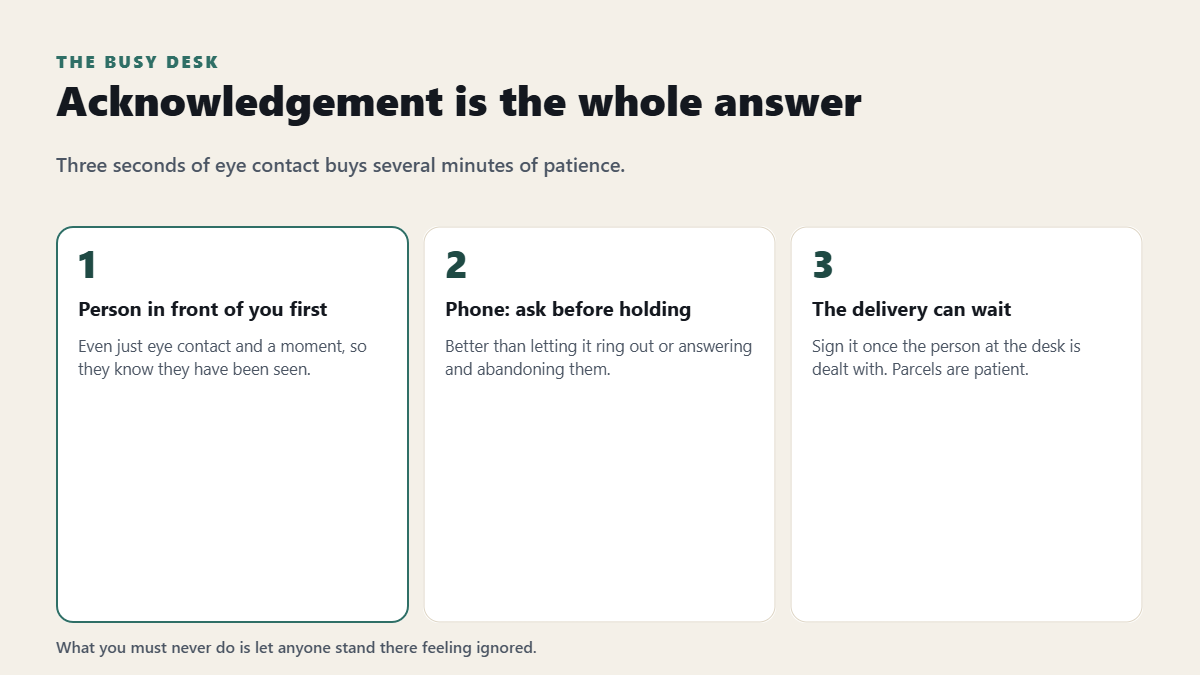
"I would acknowledge the person in front of me first, even just with eye contact and a moment, so they know they have been seen. I would answer the phone and ask if I can put them on hold briefly rather than letting it ring out. The delivery can wait a minute — I would sign it once the person at the desk is dealt with. The thing I would avoid is letting anyone stand there feeling ignored."
Acknowledgment is the whole answer. Three seconds of eye contact buys several minutes of patience.
"How do you handle a rude or difficult visitor?"
Stay warm, stay level, do not match their tone. Find out what they actually need, because the anger is usually about something else. Offer what you can. If they will not calm down or the situation feels unsafe, involve someone else — and say that out loud, because knowing when to get help is part of the job.
"How would you keep confidential information secure?"
Especially important in medical, legal and school settings, and often the deciding question.
Cover the practical detail: not discussing anything in the waiting area, screens angled away from the desk, not confirming whether someone is a patient or client, locking your screen when you step away, and taking a message rather than giving anything out over the phone.
Volunteering the screen-angle detail unprompted marks you out immediately.
"What systems have you used?"
Be specific. Phone systems, calendars and scheduling software, any practice-management or CRM tools, and how fast you type if you know it.
If you have not used their system, say you have used a comparable one and that you pick software up quickly — then give a one-line example of a time you did.
"Tell me about a time you made a mistake"
For a receptionist this usually means a double booking, a message that never got passed on, or the wrong person let through.
Say what happened, say what you did the moment you noticed, and say what you changed. The change is the answer. "Now I repeat the name and time back before ending the call" is exactly the kind of thing they want to hear.
The things that count before you speak
Arrive fifteen minutes early. For this role, lateness is close to disqualifying.
Greet everyone. The person who opens the door may well be asked what they thought of you.
Bring a written list of your availability. Cover and shift patterns matter, and specificity is reassuring.
Watch your phone voice. Some employers ring you as part of the process. Answer as if it might be them.
Say the busy-desk answer out loud
If you rehearse one thing, make it the four-things-at-once question. It is nearly guaranteed, and the difference between "I would prioritize" and the sequence above is entirely in having said it before.
Then do the confidentiality one, which people know but deliver vaguely.
If you want the questions asked properly with follow-ups, RehearseAI runs the interview out loud for the role and tells you afterwards about pace and clarity. Every account gets one free 5-minute interview a month, no credit card required.
Quick answers
How long is a receptionist interview? Usually twenty to forty minutes, occasionally with a short typing or software test.
What should I wear? Smart and understated, matched to the setting. You are the first thing visitors see, and they are picturing that.
Will they test my typing? Sometimes, especially in medical and legal offices. Ask when they invite you.
What if I have no reception experience? Use retail, hospitality or any front-facing role. Being the calm point of contact is the transferable part.
The "tell me about a time" questions fit the STAR method. More on why I built this.