RehearseAI
Most practice interviews end the same way. Someone says "that was pretty good," you say "thanks," and nobody learns anything. A mock interview rubric fixes that. It turns "pretty good" into a few numbers, and the numbers into one thing to change.
You do not need a long form. After twenty years of scoring candidates from the hiring side of the table, I can tell you that real interview scorecards are short, and yours should be too.
What a mock interview rubric is
A rubric is a short list of things to judge, with a scale for each. That is all. The person playing interviewer scores each answer as you go, and at the end you both look at the sheet instead of trading vague impressions.
The point is not the total. The point is the pattern. If "length" scores low on four answers out of five, you have found your problem, and it took fifteen minutes.
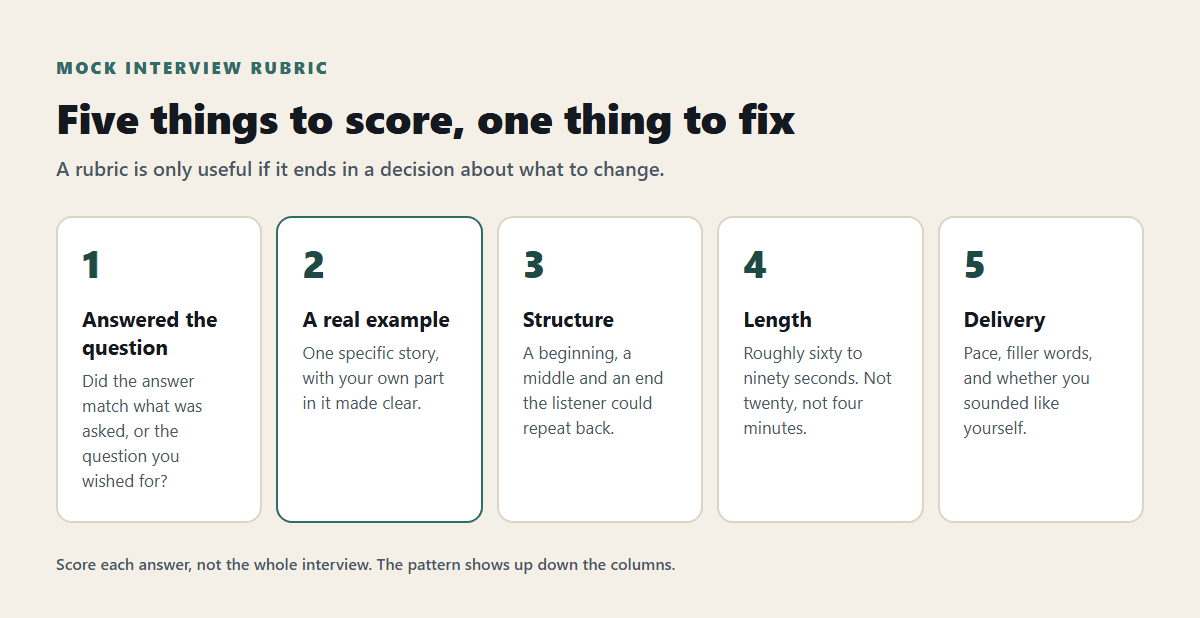
The five things worth scoring
1. Did the answer match the question? This sounds obvious, and it is the most common miss. Asked about a conflict, a nervous candidate describes a project. Score whether the question that was asked got answered.
2. Was there a real example? One specific situation, with your own part in it made clear. "We improved the process" is a 2. "I rewrote the checklist and trained the two new hires on it" is a 3.
3. Did it have a structure? A beginning, a middle and an end. The simplest shape is the STAR method: where you were, what was yours to do, what you did, what changed. If the listener could not repeat the story back, it scores low.
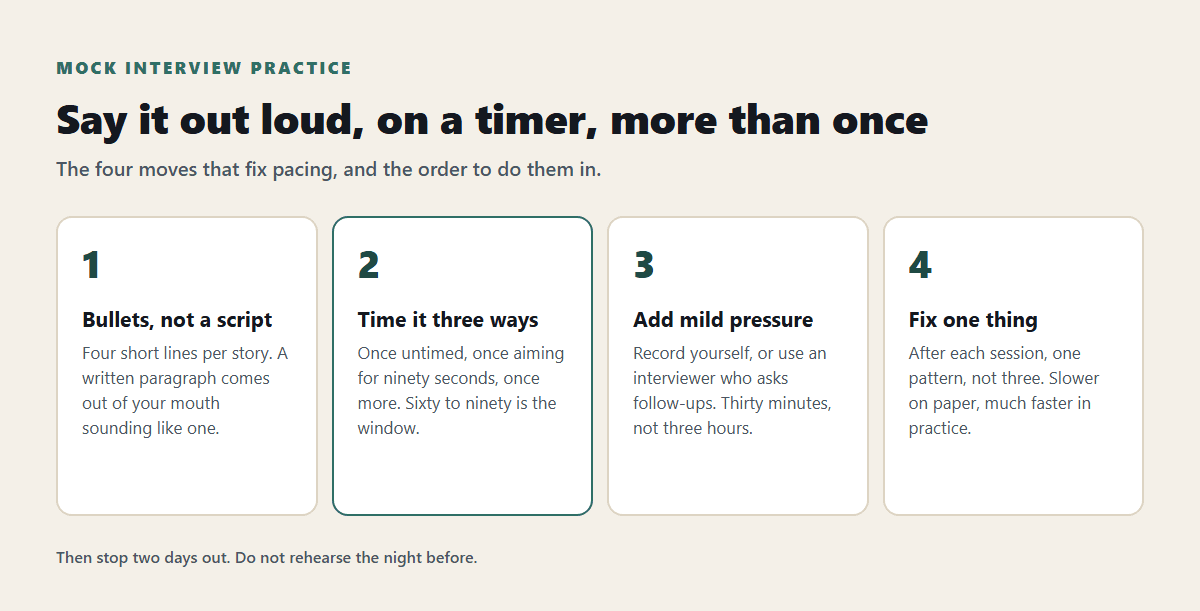
4. Was it the right length? Sixty to ninety seconds suits most answers. Time each one. People are consistently surprised by how long they talk.
5. How was the delivery? Pace, filler words, eye contact, and whether you sounded like a person or a memorized paragraph. Score this last. It improves on its own once the first four are in place.
The scale
Use four levels. With five, everyone picks the middle. With ten, people argue about the difference between a 6 and a 7.
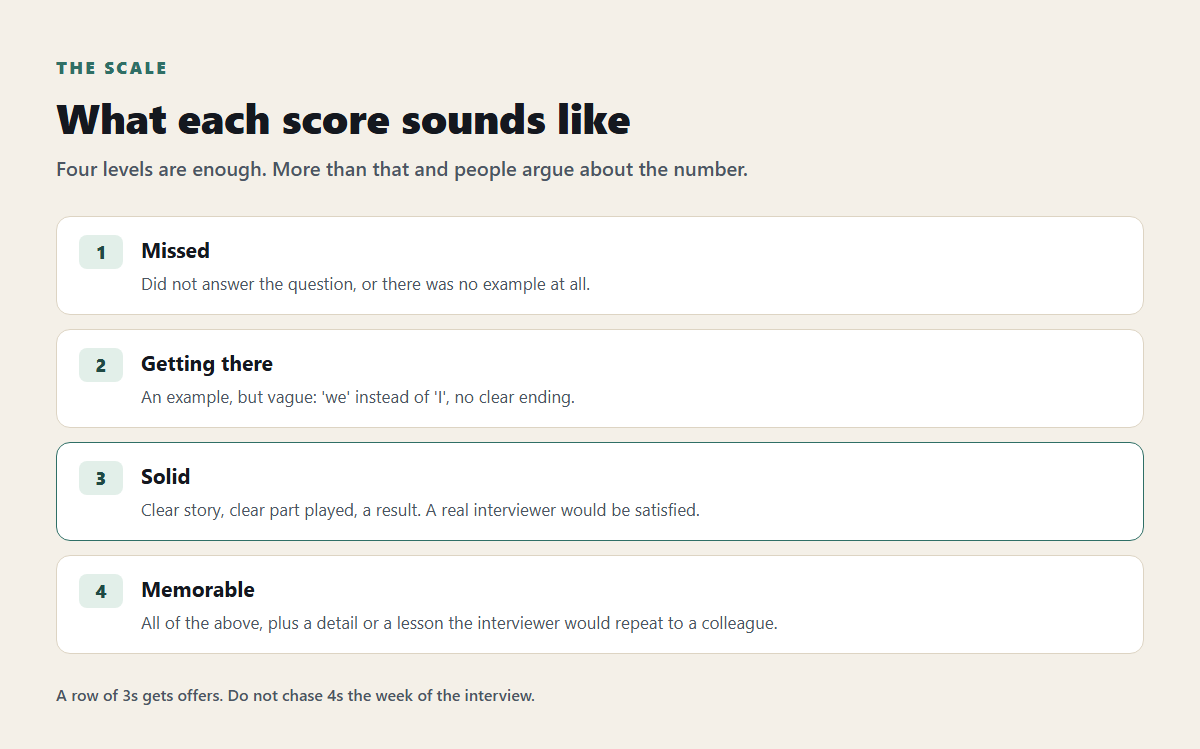
A 3 means a real interviewer would be satisfied and move on. That is the target. A page full of 3s is a strong interview, and trying to turn every answer into a 4 in the last week usually makes people sound rehearsed.
How to use it in a practice run
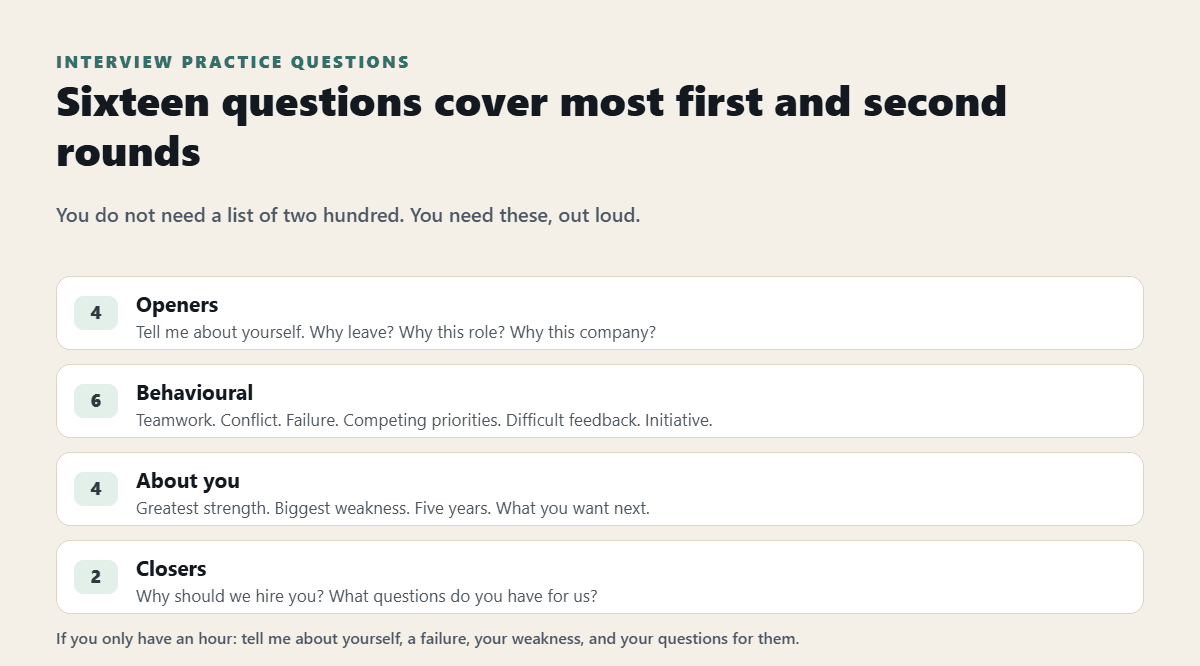
- Pick five or six questions before you start. The ones the job posting makes likely. The free question generator will write them from the posting if you want a head start.
- Score as you go, not from memory. The scorer jots five numbers after each answer. Thirty seconds, then the next question.
- Do not discuss until the end. Stopping to talk after each answer turns the practice into a chat.
- Read the columns, not the rows. Look down each of the five columns. The lowest column is your one fix.
- Run it again within a few days. Same rubric, new questions. You are checking whether that one column moved.
If you are running the practice yourself, how to run a mock job interview covers the setup.
Scoring yourself when nobody is free
You can use the same rubric alone. Record yourself answering, wait an hour, then watch it once and score it as if it were a stranger. The wait matters. Right after an answer, you remember what you meant to say, not what you said.
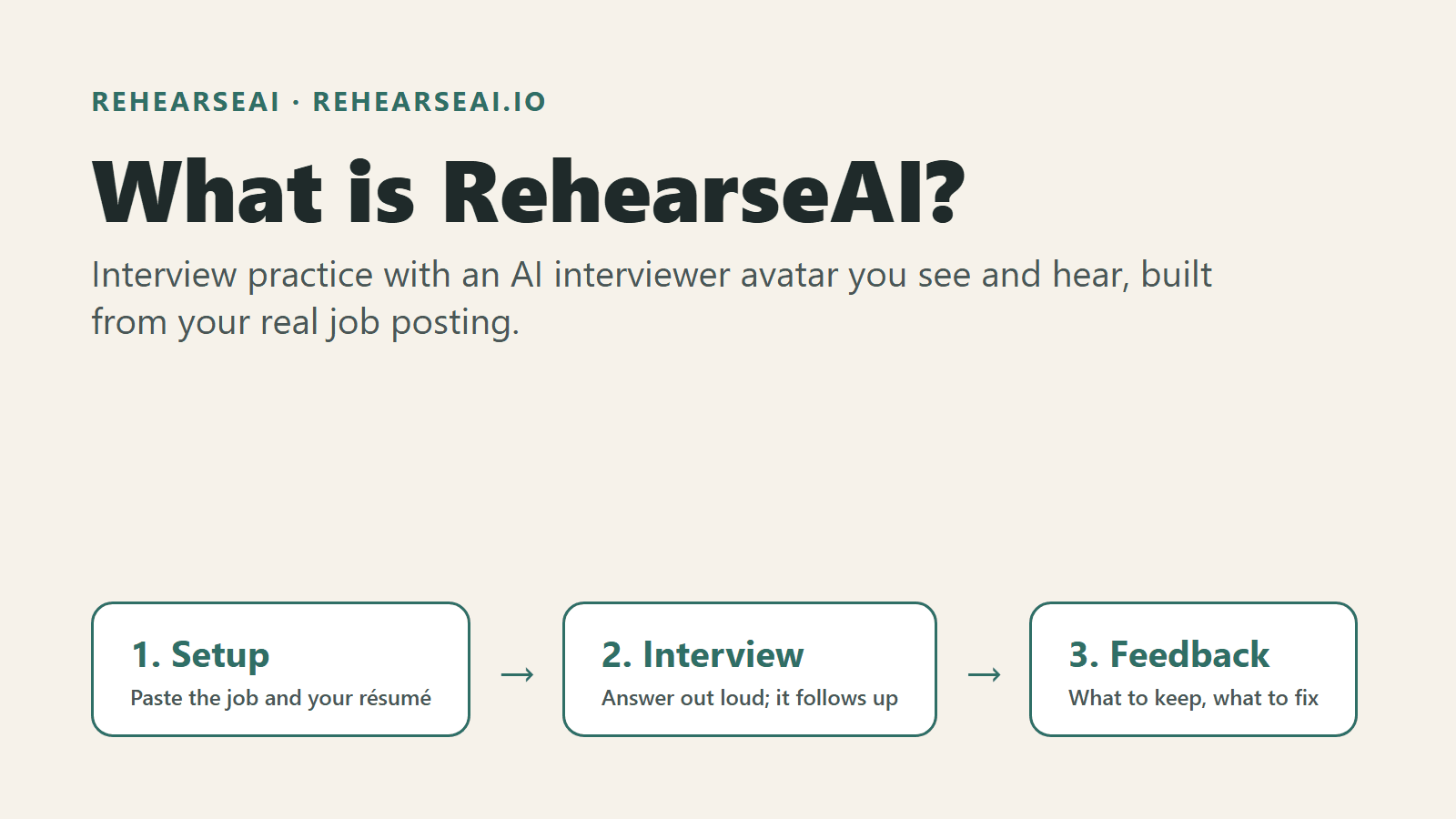
The other option is to let software do the scoring. RehearseAI asks the questions out loud, follows up, and gives you a report afterward that grades each answer, including how long you spoke. Every account gets 10 free practice minutes a month — one 10-minute interview, or shorter sits whenever you like, no credit card required.
Quick answers
How many categories should a mock interview rubric have? Five is plenty. Past that, the scorer is filling in a form instead of listening.
Should the scorer share the numbers? Yes, all of them. The numbers are the useful part. A kind summary is not.
What is a passing score? Mostly 3s. One low column is normal and is exactly what the practice is for.
Can a teacher or career counselor use this for a class? Yes. It works well in pairs: one student interviews, one answers, then they swap. Collect the sheets and you will see what the whole group needs.
<!-- related-guides -->Related guides
If this was useful, these are the next ones to read:
- Interview Practice Questions That Are Worth It: Sixteen interview practice questions that cover most rounds, the four that decide it, and how to practice them so reading turns into speaking.
- HireVue Practice: How to Prepare Properly: How to practice for a HireVue interview: how the recorded format works, the setup that matters, and why three takes of one question beats everything else.
- Target Video Interview Questions and Setup: The questions in Target's video interview, why the format is harder than the questions, and the fifteen minutes of setup that changes your result.
Sources
University career centers publish their own versions of a mock interview rubric. These are worth a look if you want a longer form:
- Mock Interview Rubric — University of Washington Career & Internship Center
- Mock Interview Scoring Rubric (PDF) — Cal Poly Humboldt Career Development
- Using the STAR method for your next behavioral interview — MIT Career Advising & Professional Development
For pacing and timing in more detail, see mock interview practice. More on why I built this.