RehearseAI
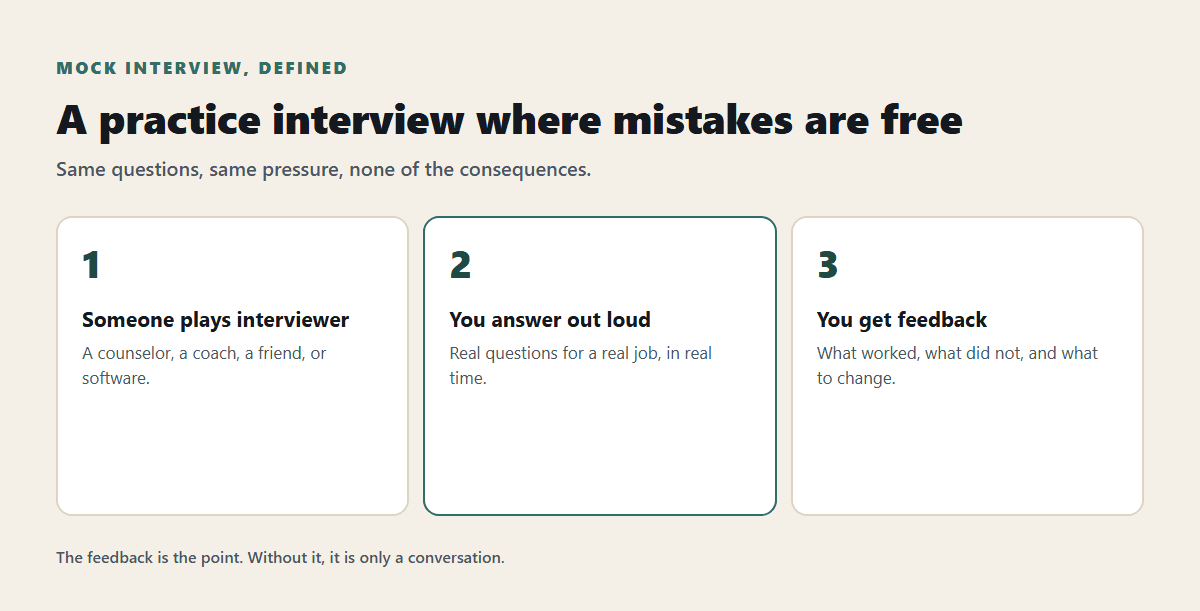
Mock interview coaching means paying someone, usually a former recruiter or hiring manager, to interview you and tell you honestly how it went. It can be worth every dollar. It can also be an expensive way to hear what a friend with a printed list of questions would have told you for free.
I spent twenty years on the hiring side of the table before building an interview practice tool, so I have an interest here and I will say so plainly. What follows is how I would decide if it were my own money.
What a coach actually adds
A good coach gives you three things that are hard to get elsewhere:
- Honesty. A stranger who is paid to be useful will tell you that your answer about leaving your last job sounds bitter. A friend usually will not.
- Field knowledge. Someone who has hired nurses, or engineers, or sales managers knows what that interview really tests, and which answers make a panel wince.
- A second pair of ears on your story. Career changes, gaps, a layoff, a move from one industry to another. A coach can help you find the one calm sentence that explains it.
What a coach does not add is repetition. One session is one run-through. Interview skill comes from saying your answers out loud many times, and no one books a coach eight times in a week.
When coaching is worth paying for
- The stakes are high and the field is narrow. A final round for a senior role, a residency, a job at one specific company.
- You have a story that is hard to tell. A long gap, a firing, a big change of direction.
- You have practiced and stopped improving. You are doing the work and something still is not landing, and you cannot tell what.
- You keep reaching final rounds and not getting the offer. That pattern usually has one cause, and an experienced outsider can often spot it in a single session.
When it is probably not
- You have not practiced out loud at all yet. Your first few run-throughs will be rough for ordinary reasons: answers too long, no clear example. Fix those for free first, and spend a coach's time on what is left.
- The interview is tomorrow. There is no time to act on what you hear.
- You mostly need to calm down. Nerves ease with repetition, not with one expensive hour. See how to handle interview anxiety.
The other three options
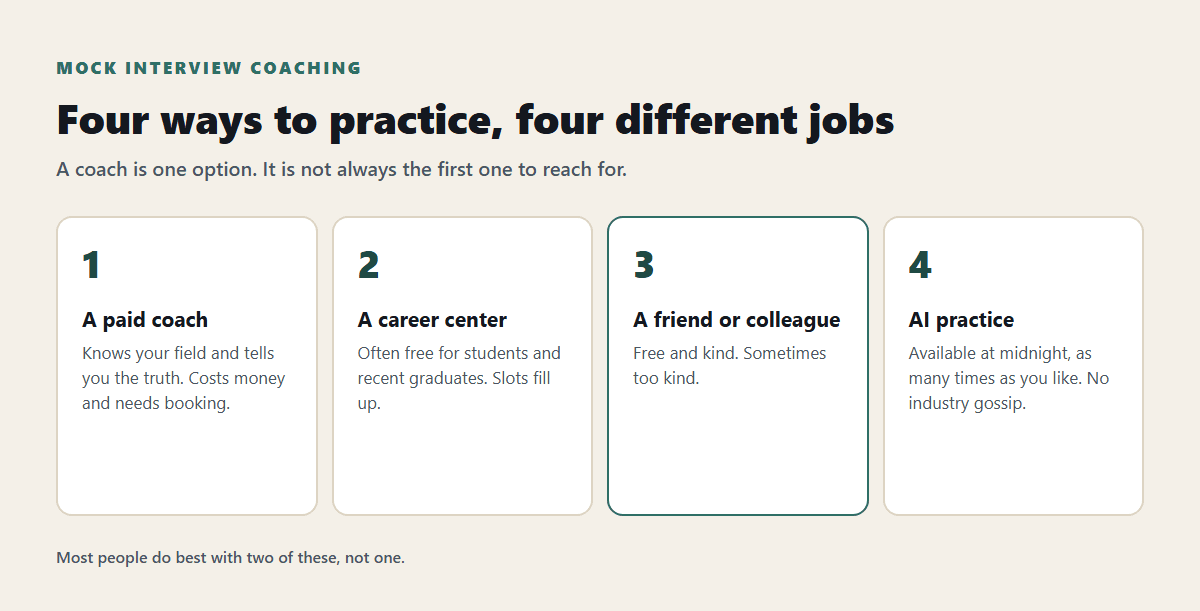
A career center. If you are a student or a recent graduate, check your school first. Many career centers run mock interviews with trained staff at no charge. Book early; the slots go fast before recruiting season.
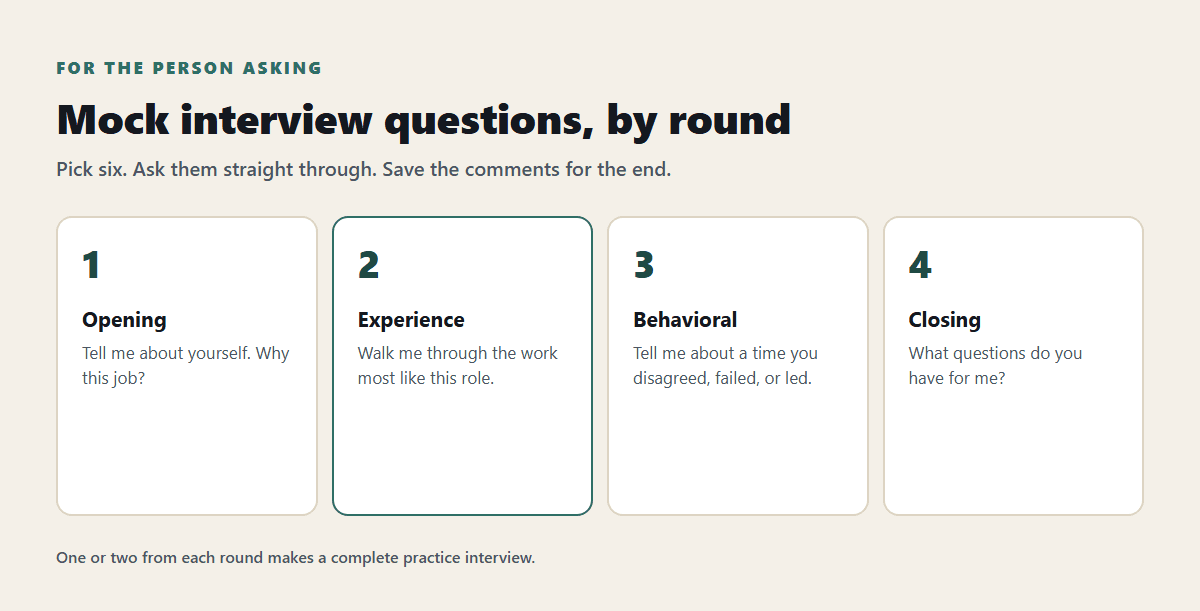
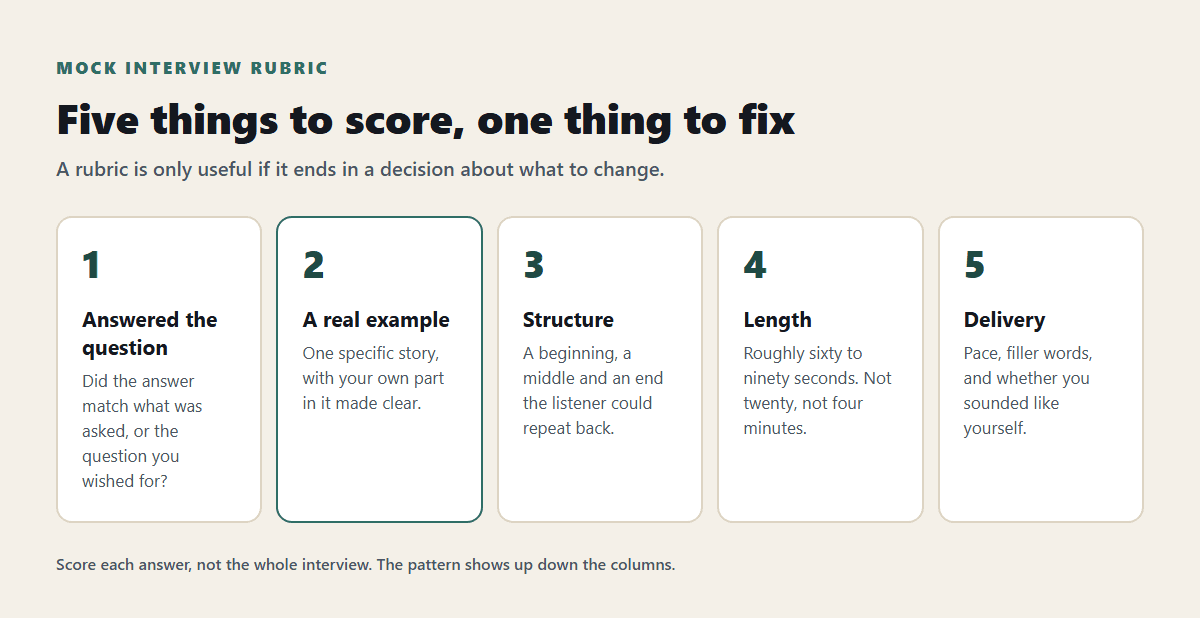
A friend or colleague. Free, and better than people expect, as long as you give them the questions and ask them to be difficult. The risk is kindness. How to run a mock job interview covers how to set it up so the feedback is useful, and a scoring rubric gives your friend something concrete to fill in.
AI practice. This is what I built, so weigh my view accordingly. An AI interviewer will not know the politics of your industry. What it gives you is repetition: it asks out loud, follows up when you are vague, and is there at eleven at night when the nerves are. With RehearseAI, every account gets 10 free practice minutes a month — one 10-minute interview, or shorter sits whenever you like, no credit card required, and Premium members can also invite a real person they know to run the interview over video.
The combination that works
For most people the best plan uses two of the four:
- Repetition first. Practice out loud, alone or with AI, until your answers are a sensible length and each one has a real example.
- Then one honest human. A coach if the stakes justify it, a blunt friend or a career center if not. Bring your two weakest answers and spend the time there.
That order matters. It means the human hour goes on the problems only a human can see.
What to ask before you book
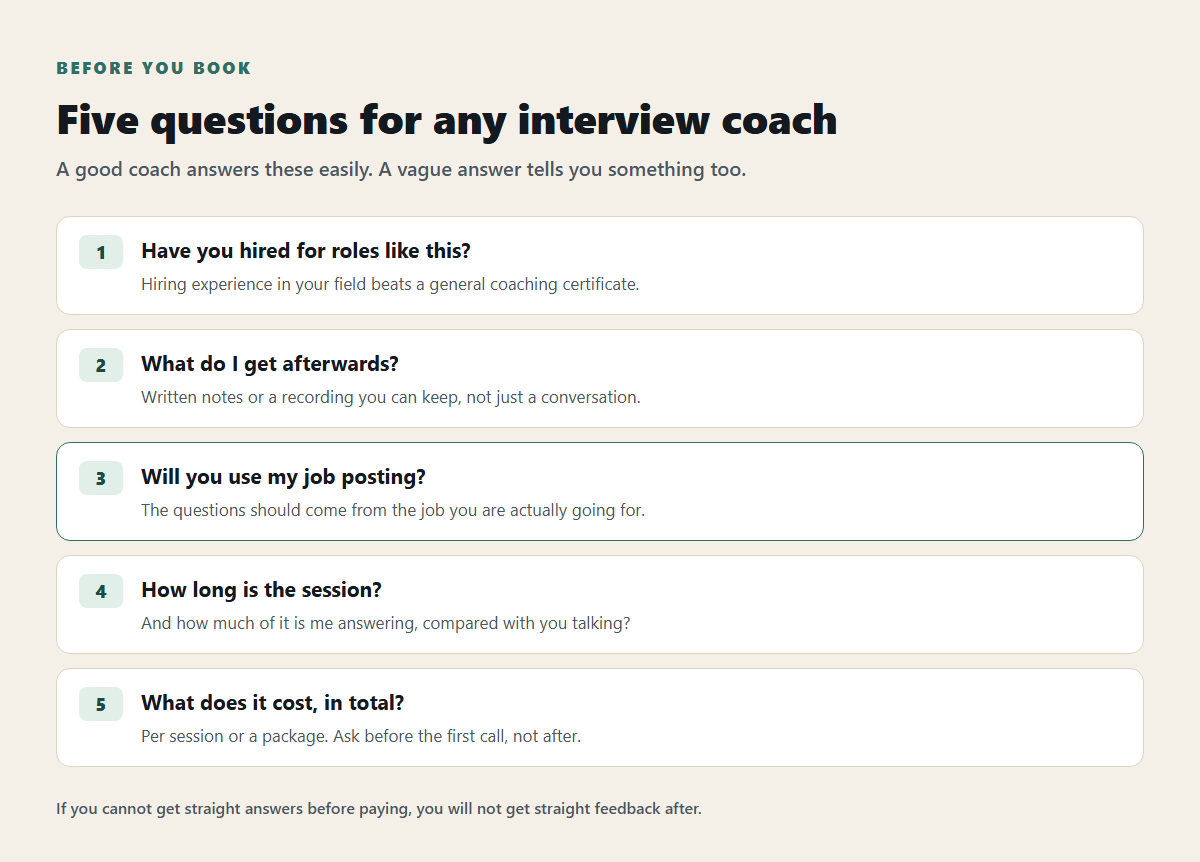
Prices and formats vary a great deal from coach to coach, so ask for the total cost and exactly what you receive before the first session. A good coach will have clear answers.
Quick answers
How many coaching sessions do I need? Often one, if you have practiced first. A second makes sense only when the first one gave you something specific to fix.
Is a coach better than a friend? More honest and better informed, usually. Not always better value.
Can a coach guarantee an offer? No. Be wary of anyone who says they can.
Should the coach be from my industry? For senior or specialist roles, yes. For a first job, general hiring experience is enough.
<!-- related-guides -->Related guides
If this was useful, these are the next ones to read:
- Mock Interview Practice: How to Improve Your Answers and Timing: Most interviews are lost on pacing, not knowledge. How to get your answers into the sixty to ninety second window, and handle the follow-up without unraveling.
- Interview Practice Questions That Are Worth It: Sixteen interview practice questions that cover most rounds, the four that decide it, and how to practice them so reading turns into speaking.
- HireVue Practice: How to Prepare Properly: How to practice for a HireVue interview: how the recorded format works, the setup that matters, and why three takes of one question beats everything else.
Sources
University career centers that describe how their mock interviews work:
- Mock Interviews — The Career Center, University of Illinois
- Mock Interviews — Ohio University Career Services
- Interview Preparation — Career Engagement, University of California, Berkeley
More on why I built this. The free question generator writes the questions a posting will ask — no account needed.