RehearseAI
Getting a second interview means the first one worked. They believe you can probably do the job. Something has changed, and most candidates do not adjust for it.
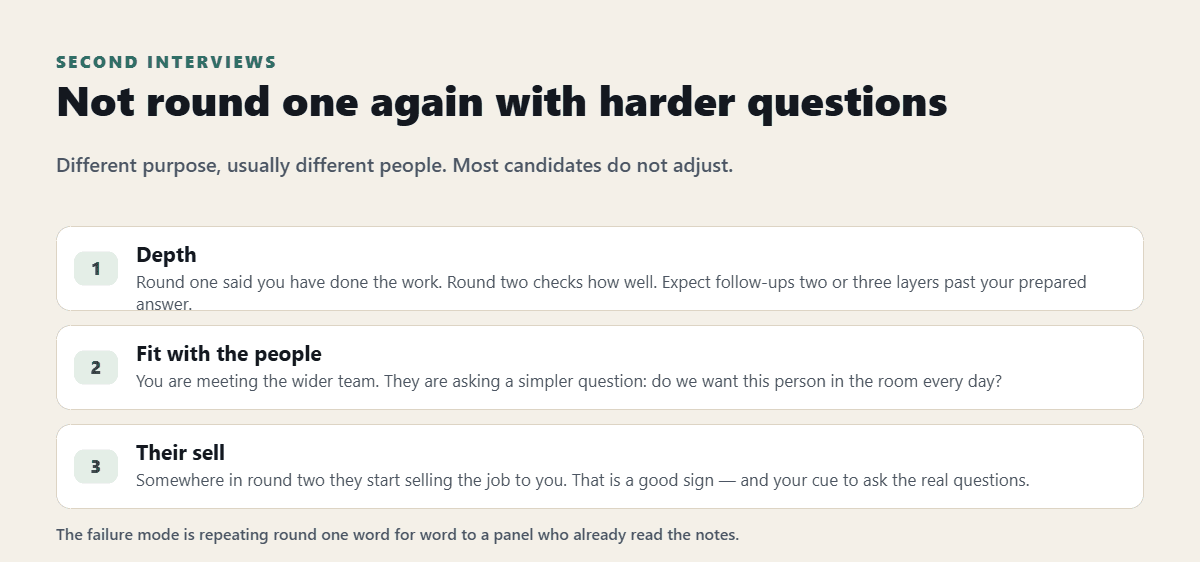
The second round is not the first round again with harder questions. It is a different conversation with a different purpose, usually involving different people, and the failure mode is repeating yourself word for word to a panel who already read the notes.
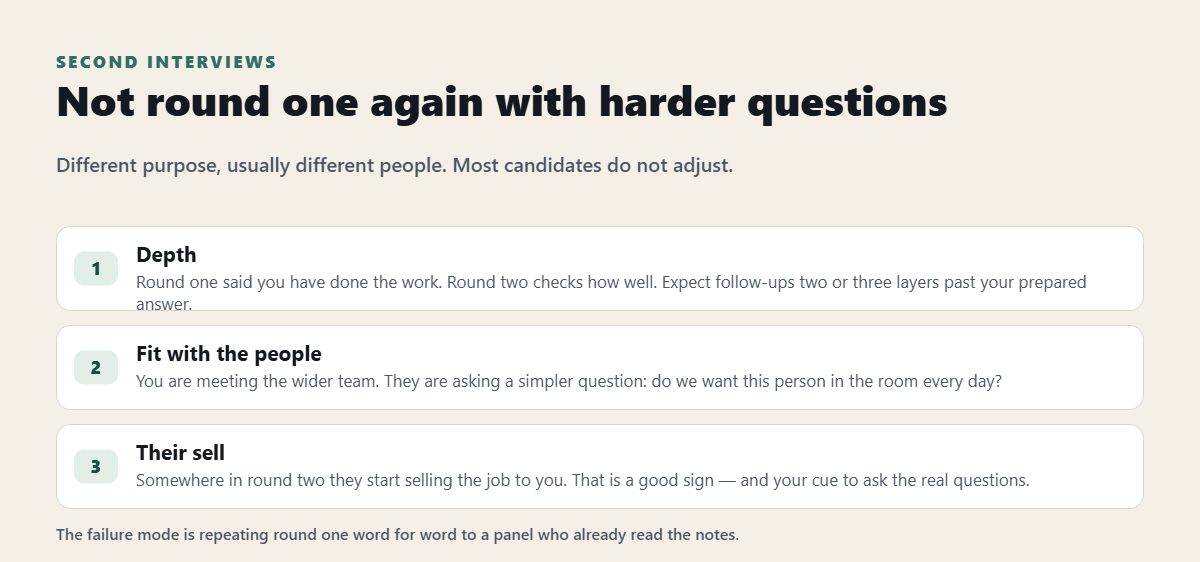
What the second interview is actually for
Three things, roughly in this order.
Depth. Round one established that you have done the work. Round two checks how well. Expect follow-ups that go two or three layers past your prepared answer — what you would do differently, what the trade-off was, what happened afterward.
Fit with the people. You are often meeting the wider team, a peer, or someone senior. They are asking a simpler question: do we want this person in the room every day?
Their sell. Somewhere in round two they usually start selling the job to you. When that happens, it is a good sign — and it is also your cue to ask the questions that matter, because they are now motivated to answer.
What changes in your answers
Go deeper, not longer. Use the same core stories, but bring the second layer: the decision you agonized over, the thing that did not work first time, the number at the end.
Do not repeat round one verbatim. Notes get shared. If you tell the identical anecdote in identical words, it reads as a script rather than an experience. Same story, different emphasis, is fine and expected.
Have new material ready. At least one story you did not use in round one. Being asked "anything else?" and having nothing is a flat moment.
Reference the first conversation. "You mentioned last time that the team is rebuilding the reporting layer — I have been thinking about that." It shows you listened, and almost nobody does it.
The questions that show up in round two
"What would your first ninety days look like?"
Increasingly common, and it separates people. You are not expected to have a plan for a job you have not started. You are expected to have a shape: learn first, find the quick win, then the bigger thing. Ask questions in the answer rather than pretending certainty.
"Where does this role sit against the others you are considering?"
They are testing how likely you are to accept. Be honest without being either desperate or coy. "This is my first choice and here is why" is a fine answer if it is true.
"What did you think about after the first conversation?"
A gift, and only if you prepared. Have one real thought.
"What are your salary expectations?"
If it did not come up in round one it will now. Have a range and a reason, and know your floor before you walk in.
Meeting a peer or a future colleague
Often framed as informal — a coffee, a chat with the team. It is not informal. It is an assessment with a friendlier tone, and the question being answered is whether people want to work with you.
Be curious about their work. Ask what a normal week looks like and what they find hardest. Do not treat a peer interview as a chance to demonstrate that you are more senior than them.
Your questions matter more now
In round one you ask to show interest. In round two you ask because you are close to a decision and need real information.
- What would make you say in six months that this hire went well?
- What is the hardest part of this role that is not in the job description?
- What is the team's biggest constraint right now — people, budget, time?
- Is there anything in my background that still gives you hesitation?
That last one is worth the small discomfort. It is your only chance to answer an objection you would otherwise never hear about.
Prepare differently than you did for round one
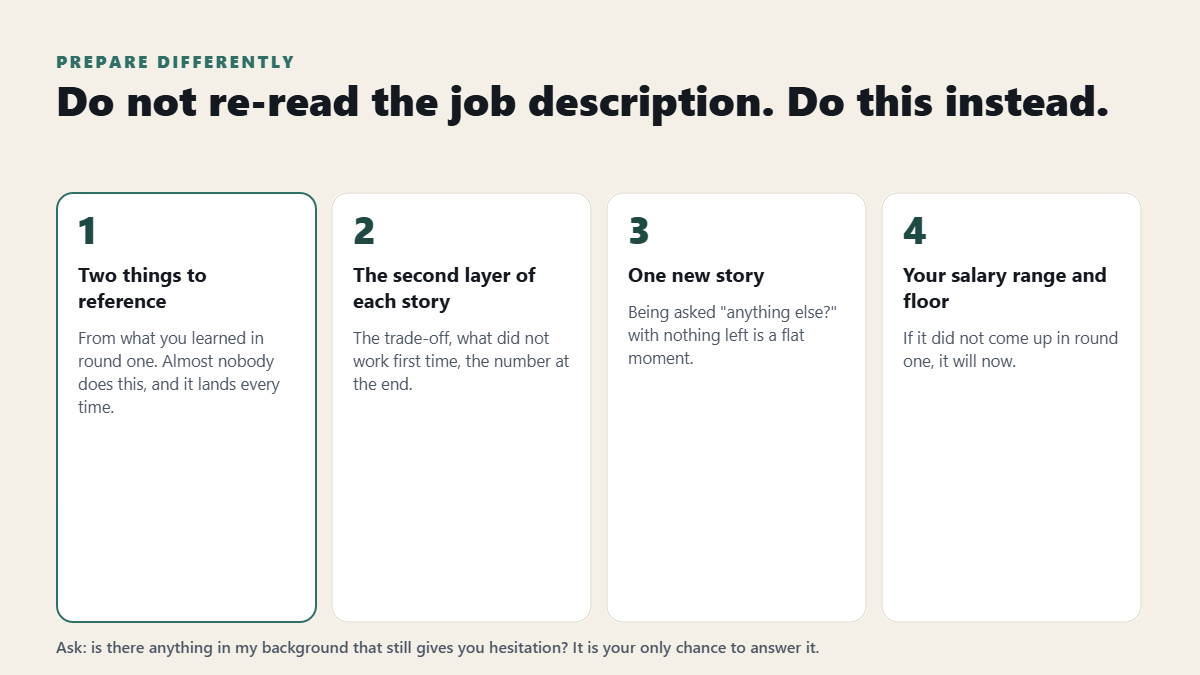
Do not re-read the job description again. Instead:
- Write down what you learned in round one, and pick two things to reference.
- Take your three stories and prepare the second layer of each — the follow-up answers.
- Prepare one new story.
- Decide your salary range and your floor.
Then say the ninety-days answer out loud, because it is the one most likely to wander when you have not rehearsed it.
If you want the deeper follow-ups asked properly, RehearseAI runs the interview for the role and stage and pushes past the first answer the way a second-round panel does. Every account gets 10 free practice minutes a month — one 10-minute interview, or shorter sits whenever you like, no credit card required.
Quick answers
How long is a second interview? Often longer than the first — sometimes a half day with several people.
Is a second interview a good sign? Yes. You are usually in a short field. It is not a formality though.
Should I send another thank-you note? Yes, and reference something specific from this conversation rather than resending the first one.
How many rounds are normal? Two or three for most roles; more for senior ones. It is fine to ask how many remain.
<!-- related-guides -->Related guides
If this was useful, these are the next ones to read:
- Interview Preparation Plan: Build Yours in a Week: A personalized interview preparation plan starts with the job description and your own history. How to build one in an evening, the seven-day schedule, and the nervous-candidate shape.
- Panel Interview: What to Expect and How to Prepare: What a panel interview is, why employers use one, where to look when three people are watching you, the questions to expect, and how to prepare for each person in the room.
- Group Interview: Questions, Tips and What to Expect: What happens in a group interview, the questions and activities to expect, and how to stand out among other candidates without talking over anyone.
Sources
The advice above lines up with what university career centers and professional bodies publish; these are the pages I checked it against:
- 2nd Interviews — Clemson University Center for Career and Professional Development
- Dealing With a Second Job Interview — University of Maryland Global Campus
Related: questions to ask in an interview and the STAR method. More on why I built this.
Round two goes deeper on the role itself. The free question generator will show you what that posting is likely to probe.